Context
Small and mid-cap exploration and production (E&P) operators run on forecasts — but most had no reliable baseline to forecast against. Decision-makers needed an operating and unlevered cash flow projection they could measure actual performance against, and run scenarios on at any level of the business. Without it, planning lived in bespoke spreadsheets that were slow to build and slower to trust.
The people doing this work were finance teams and the business-development and operations staff supporting them. Most had limited financial-modeling experience and wanted standardized models and clean data records rather than another blank spreadsheet.
Resource Planning was Zeno’s answer: a platform that ingested production, cost, market, and financial data to keep models current, then used it to forecast reserve volumes, build cash flow projections, and run in-depth sensitivity and scenario analysis — so these teams could plan reserves and read financial performance from one place.
My role
I was Senior Product Designer, owning the design and user experience for the core of the Resource Planning and Financial Planning products. I partnered with the CTO to shape the product roadmap, worked day to day with a team of seven engineers, and ran the scoping and constraint sessions that turned a broad vision into something buildable. I also kept sales, marketing, and customer success aligned so launches landed cleanly across the company.
What shipped
The hard problem wasn’t the math — it was translating messy, operator-specific data and legacy tools into one consumable Zeno plan. We had to integrate with the systems operators already used and complement their accounting tools rather than replace them. The core plan areas were common across operators, but the details varied operator by operator, so the platform had to flex without losing a shared standard. The timing of working capital meant projected and actual performance never lined up perfectly, and the design had to make that gap legible instead of hiding it.
We started by mapping how small and mid-cap operators actually worked — their workflows, their use cases, and where time was being lost. Two gaps stood out: the lag between requesting a scenario and getting an output, and the lag between spotting a performance problem and understanding what caused it.
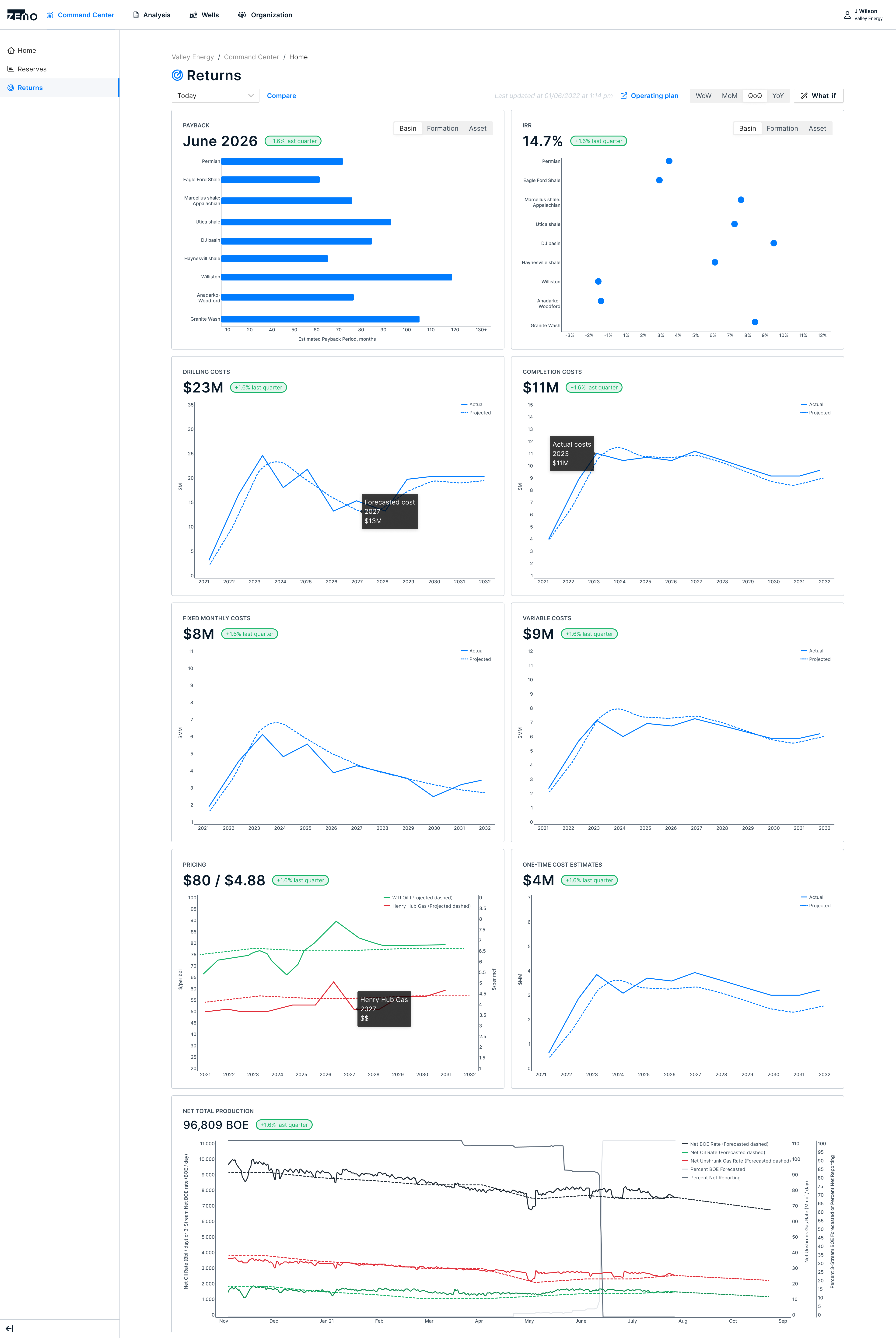
The product centered on operators building an operating plan from their well inventory — configuring ownership decimals and joint-interest agreements, running volumetric decline-curve forecasts for production, weighing upside wells against future revenue and cash balances, and layering in per-well cost structures for development and operations.
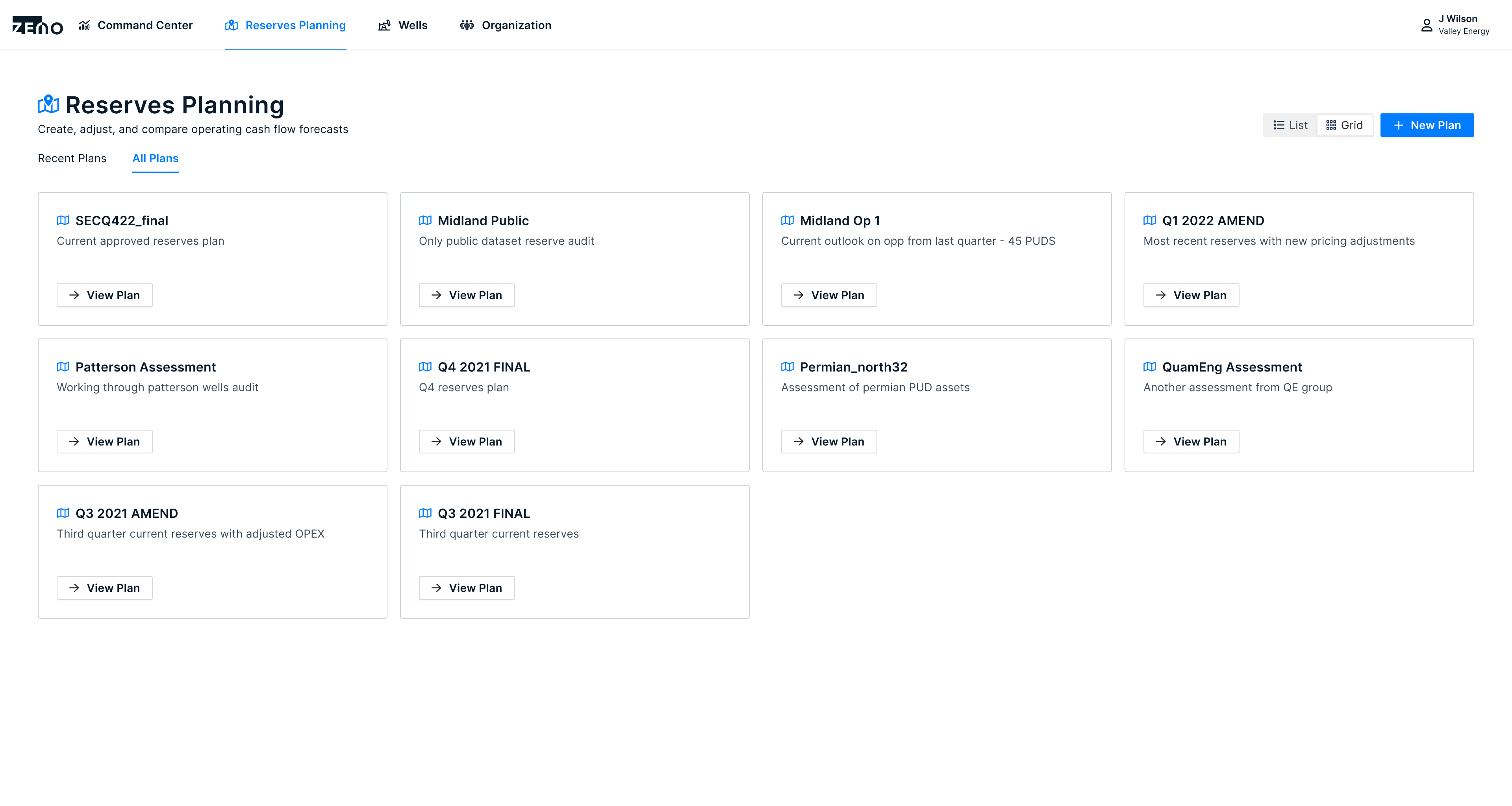
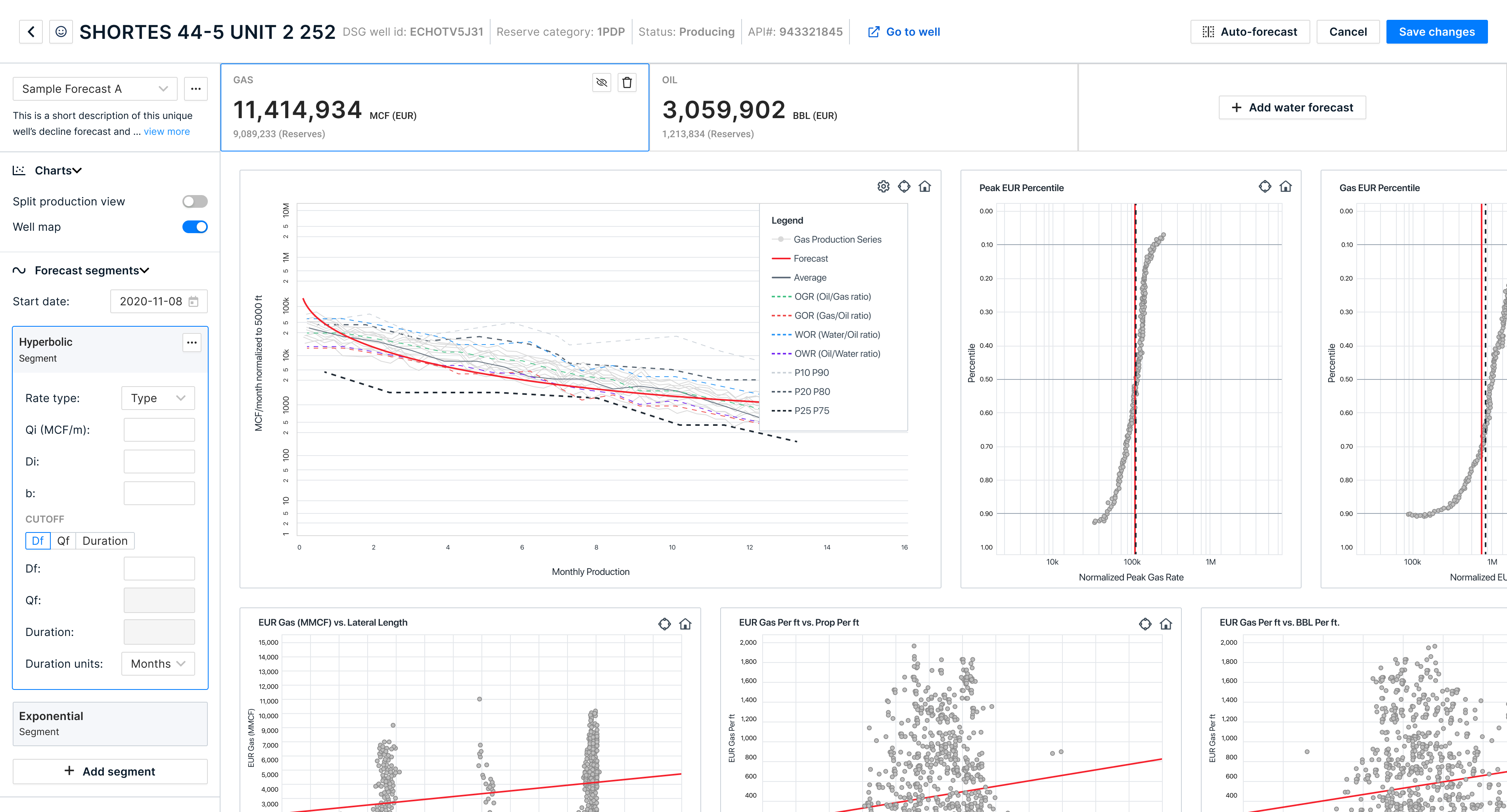
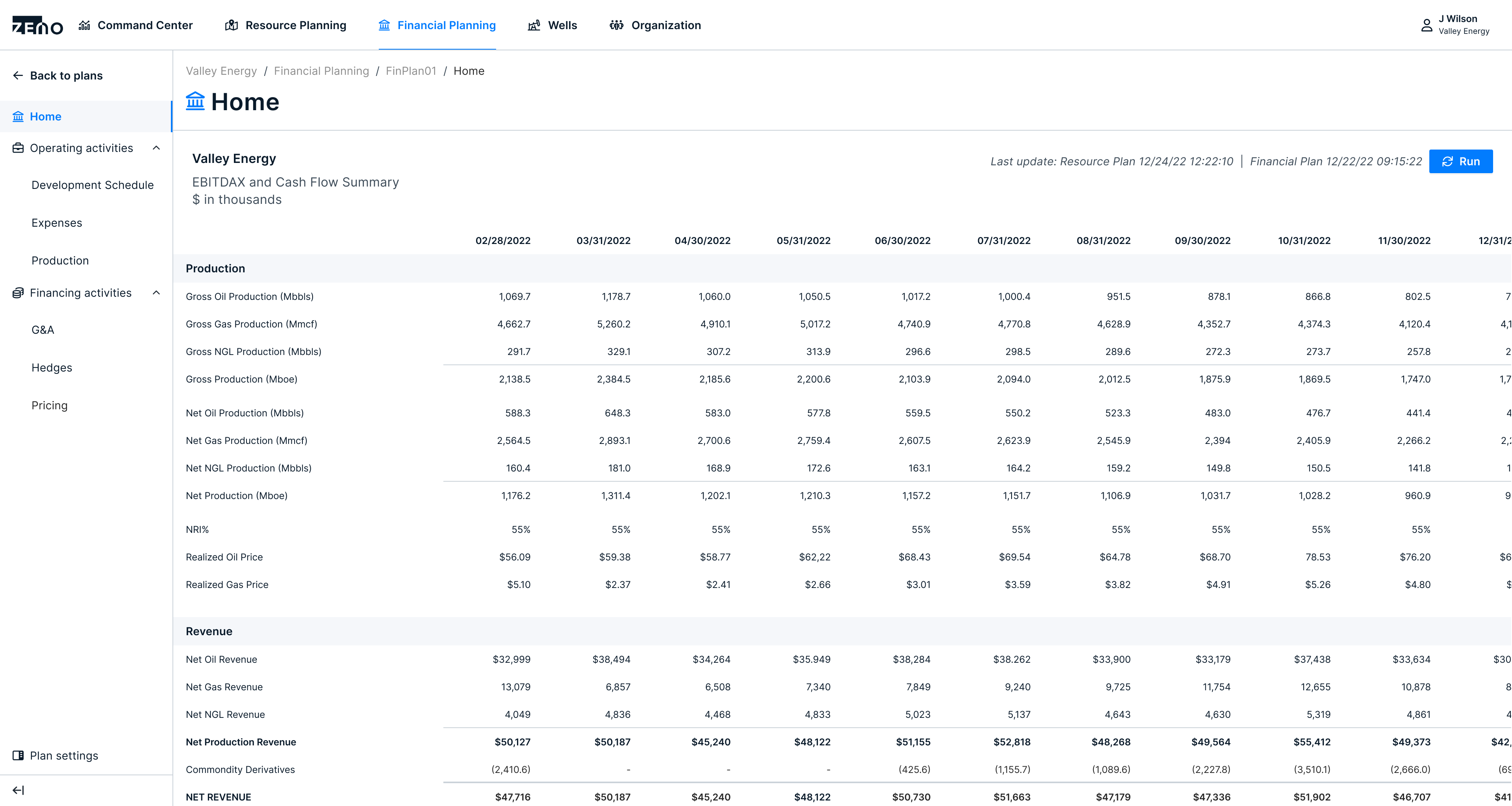
Outcome
Projections that used to take long turnaround times were now available in real time. Teams could make decisions on current numbers and got hours back in their day to spend on the work that actually moved the business. Aggregating data across the business — a long-standing pain for operators — became far more efficient.
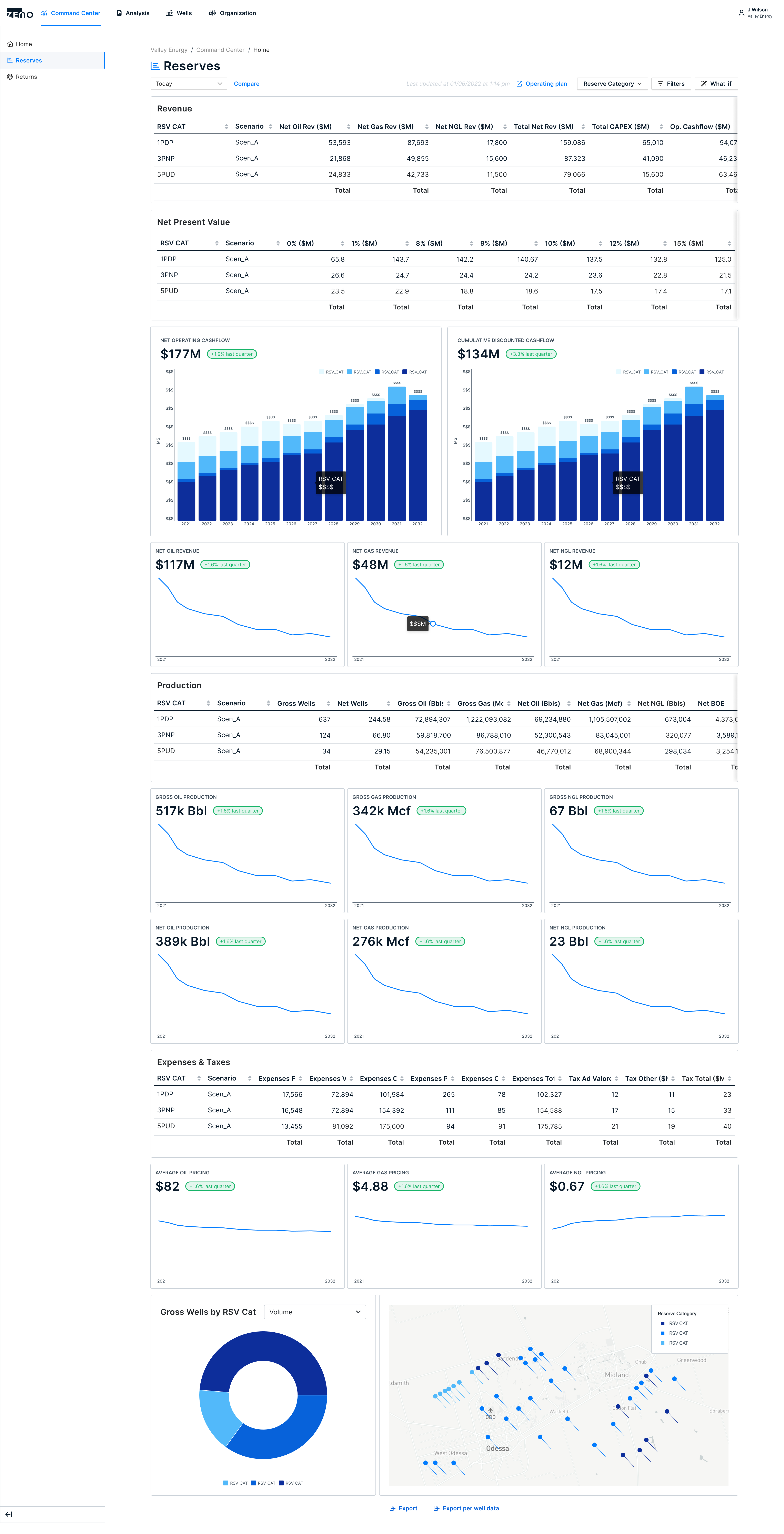
The honest weak point was implementation. Getting an operator’s data and plans into the system was the slowest, most friction-heavy part of the experience, and it was the clearest place to improve next. The lesson held up: the wins came from giving users a real-time, current view of their operating and financial plans — and a smoother implementation would have amplified every one of them.